


Summary first:
- Gym floor restoration in Baltimore involves a multi-step process of inspection, sanding, sealing, and refinishing that extends a floor’s usable life by decades when done correctly.
- Hiring a contractor with MFMA accreditation is the industry standard for safe, performance-grade results on athletic wood floors.
- Regular recoating and humidity control are the two most effective ways to protect a restored floor long-term.
Restoring a wood gym floor in Baltimore is not the same as refinishing a residential hardwood floor. Athletic surfaces carry specific performance, safety, and finish requirements that demand a specialized approach from start to finish.
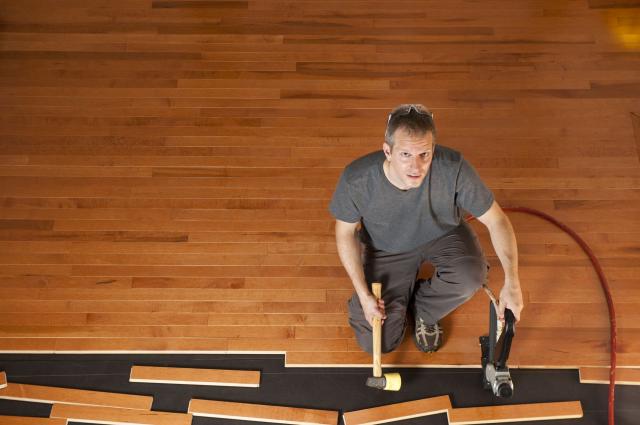
Professional wood gym floor restoration in Baltimore MD begins with a thorough floor inspection before any sanding equipment is brought in. The athletic maple system must be cleared of all equipment, then inspected and approved by the contractor to confirm proper moisture content and eligibility for resurfacing. All repair work must be completed before sanding begins. Skipping this step is one of the most common causes of premature finish failure.
What the Restoration Process Actually Involves
A proper gym floor restoration follows a defined sequence. Rushing any phase compromises both safety and durability.
- Moisture assessment – Wood expands and contracts with humidity. The Maple Flooring Manufacturers Association (MFMA) recommends that indoor air temperature stay between 55 and 75 degrees and relative humidity between 35 and 50 percent before and during any restoration work.
- Multi-cut sanding – The floor must be sanded using a minimum of three cuts, moving from coarse to fine grit to create a surface that accepts finish evenly.
- Controlled material removal – The initial sanding removes approximately 1/32 inch of maple thickness, and subsequent sandings by experienced contractors should remove no more than 1/32 inch.
- Sealing and finishing – Immediately before the first coat of finish, the floor should be thoroughly tack-ragged, paying close attention to edges and corners, then an even coat of finish applied per the manufacturer’s instructions and allowed to dry completely.
- Game line painting – Court markings and custom graphics are hand-applied after the base finish coats cure.
According to the MFMA’s athletic floor resurfacing guidelines, the finish product must be approved and listed on the MFMA Athletic Flooring Sealer and Finish Conformance List, and the contractor must be a current member of the Maple Flooring Manufacturers Association.
Restoration vs. Replacement: Knowing Which Option Fits
Not every damaged gym floor needs to be replaced. The table below outlines when restoration is the right call and when a full replacement is warranted.
| Condition | Recommended Action |
| Surface scratches, scuffs, dull finish | Recoat or screen-and-recoat |
| Deep gouges, faded game lines, uneven sheen | Full sand and refinish |
| Cupping, buckling, or subfloor damage | Structural repair before refinishing |
| Boards beyond sanding depth or rotted | Partial or full replacement |
A 25/32-inch-thick floor with regular maintenance and sanding every 8 to 12 years can typically be sanded up to six times, resulting in a lifespan of over 75 years. That figure makes restoration a sound long-term investment for most Baltimore schools and athletic facilities.
Why Accreditation Matters for Baltimore Athletic Facilities
Baltimore-area gyms serve high-traffic populations, from school athletes to government facility users. The contractor’s credentials directly affect the safety of everyone who uses the floor.
The flooring contractor must be an MFMA Mill Accredited Installation Company with MFMA Accredited Installers on-site for the duration of the refinish. This requirement exists because gym floors must meet coefficient-of-friction and shock-absorption standards that standard residential finishes do not address.
MasterCare is an MFMA Accredited Installer with over 30 years of experience installing wood and synthetic sports and athletic flooring, providing services for school and university gyms, government athletic facilities, and private sporting organizations. If an athletic floor needs a lift, they offer sanding and refinishing services, plus hand-painted custom graphics and game lines.
Keeping a Restored Floor in Top Condition
Restoration is only half the equation. What happens after the contractor leaves determines how long the results last.
- Most gymnasium floors should be recoated annually.
- Never use water to clean the floor, and never use dust mops treated with silicone, wax, or acrylic-based products.
- Too much moisture causes abnormal expansion, which can lead to cupping or buckling of the floor.
- After applying the final coat of finish, do not use the floor until the manufacturer’s recommended cure time has elapsed, and avoid heavy traffic for at least one week.
Facilities that follow a consistent maintenance schedule protect their restoration investment and reduce the frequency of costly full resurfacing projects.
Frequently Asked Questions
How long does a gym floor restoration take in Baltimore? Most full sand-and-refinish projects take three to five days, depending on floor size, the number of finish coats required, and cure time between coats. Scheduling during a school break or off-season minimizes disruption.
How often should a gym floor be sanded and refinished? With regular maintenance, sanding every 8 to 12 years is the standard interval for a properly maintained maple gym floor. Annual recoating between full sandings helps extend that cycle.
Does humidity in Maryland affect the restoration timeline? Yes. Maryland’s summer humidity can push indoor moisture levels outside the safe range for finishing. Contractors should verify that the facility’s HVAC system can maintain stable conditions throughout the project.
What credentials should I look for in a Baltimore gym floor contractor? Look for MFMA accreditation specifically. The contractor must be an MFMA Mill Accredited Installation Company with accredited installers on-site for the work to meet athletic flooring standards.
Gym floor restoration in Baltimore is a technical process with real safety implications for athletes and facility users. Working with a credentialed, experienced contractor who follows MFMA standards is the most reliable way to get a surface that performs well, looks professional, and lasts for decades. To learn more about athletic floor services in the Baltimore area, visit MasterCare Flooring, Inc. for local provider information.